Political correctness ...


in a 16th century version by Breughel the elder.

A more recent version is to be found on : http://www.artnotoil.org.uk/gallery/v/2006/TheBlindLeadingTheBlind---T.jpg.html, but these are not blind, just greedy.

D' oh !

According to various sources, a doughnut-brandishing Homer was painted next to the world-famous giant on the hill above Verne Abbas, Dorset, to promote the new Simpsons film.

The image has been painted with water-based biodegradable paint which will wash away as soon as it rains.

Am I the only one who is confused by the difference in color of the grass under the two figures ?

Bedevaartsoorden


"Met 14 miljoen pelgrims per jaar blijft het Mexicaanse bedevaartsoord Guadeloupe, waar Maria al sinds de zestiende eeuw vereerd wordt, de populairste bedevaartplaats ter wereld. Guadeloupe gaat in de top drie de Sint-Pietersbasiliek in Rome en Lourdes vooraf. Dat blijkt uit de onlangs gepubliceerde lijst van populairste bedevaartplaatsen van ‘The Wall Street Journal’. Volgens de legende verscheen de Maagd Maria op 9 december 1531 aan de indiaan Juan Diego...."

Dit komt uit Kerknet van vandaag : http://www.kerknet.be/nieuws/index.html. Het is genoeg om me nog eens goed op te winden. Legende ???

Ofwel gelooft de rooms katholieke kerk dat Onze Lieve Vrouw werkelijk verschenen is te Guadeloupe, Lourdes, Fatima ... ofwel verwijst ze die verschijningen naar het rijk der fabelen en legenden - en ik ken meerdere priesters die dat doen - maar dan moet ze de ook de moed hebben om die bedevaartsoorden te sluiten en de miljarden die ze er elk jaar opraapt te laten liggen. Een beetje minder "political correctness" en een beetje meer moed zou geen kwaad kunnen. Persoonlijk weet ik wat ik aan Lourdes heb, en dat is geen legende !

Uit de Standaard van vandaag

Ik zeg, niet als eerste, dat het fait divers eigenlijk geen reactie waard is.
Maar ik kan de woordspeling niet weerstaan : mevr. Lynch bijna gelyncht door haar vroegere supporters.
Poor kid (figuurlijk dan) ...

Retirement

I do not like publicity, and I do not particularly like Dexia (or any other bank for that matter) but this is a small masterpiece.
This is exactly how I felt now almost seven years ago.
A tie was part of our "uniform", and I have quite a collection of them. But I haven't worn one since December 31 2000 except for maybe five or six funerals.
Hmm ... ties for business and for funerals ?? I'll have to think about that one ...

July 16 1705

On July 16 1705 Joanna Maria Renneboog was born in Aaigem. She died at Denderhoutem on October 6 1775. She married David De Dier and they had at least five children.

I descend from their daughter Joanna Catharina De Dier (Denderhoutem 1738 - 1822).
She married three times. With her second husband Franciscus Goossens (Denderhoutem 1733 - 1778) she had eight children including Maria Anna Goossens (Denderhoutem 1774 - 1852), who married twice and had nine children with her first husband Paulus Franciscus Vlaminck (Massemen 1773 - Aalst 1819).

Their daughter Coleta Vlaeminck also married twice ; my great-grandmother Blondina Muylaert was born from her second marriage with Franciscus Muylaert (Denderhoutem 1818 - 1888). Blondina had a brother and a sister and five half-brothers and sisters.

This line has been found in http://perso.orange.fr/gunter.depaepe/ and has not yet been verified beyond Coleta Vlaeminck.

Status questionis 2

I never expected a flood of reactions on my blog. Finding a blog one might be interested in is largely a question of luck and mine is quite new ; the number of bloggers or genealogists interested in the families listed on my blog must be limited, and I'm sure nobody is waiting for my contrarian comments.

But the few reactions I get tend to address my contrary comments rather than my genealogy. Again, no problem. I am a contrarian, and I write this blog mainly for my own enjoyment, but reactions to my genealogy are more than welcome, including additional information and corrections. I expect I have made my share of mistakes and have found some already in secondary sources I used.

I also am willing to share my data with other interested parties, although that will become much easier if and when my website will have been developed and published.

Direct male and direct female lines

What do Franciscus Timmermans (+ Gooik 1692) and Joanna Maria Renneboog (Aaigem 1705 - Denderhoutem 1775) have in common ? They are the furthest ancestors I found in the direct male line and in the direct female line (the oldest forefather of my father ; the oldest "foremother" of my mother).

And the difference ? Without a major stroke of luck, Franciscus may be the furthest Timmermans I will ever link to - the church registers for Gooik are a mess for the early 17th century, and, given the high frequency of my family name in Gooik and the surrounding region, it will be difficult to find a sure link. I have not yet looked at other sources, but the same remark applies to any source at all.

Joanna Maria Renneboog is the furthest "foremother", not because I have "ran aground", but because I haven't looked at her ascendancy yet. She is one of the - up to now not so many - forebears who do not find their roots in the southeastern part of the province Oost-Vlaanderen or in West Brabant, regions on which my research has focused.

More about Joanna Maria Renneboog tomorrow.

Dead horse management

Dakota tribal wisdom says that when you discover you are riding a dead horse, the best strategy is to dismount.

However, in management we often try other strategies with dead horses, including the following:

1. buying a stronger whip.

2. Changing riders.

3. Saying things like "This is the way we always have ridden this horse."

4. Appointing a committee to study the horse.

5. Arranging to visit other sites to see how they ride dead horses.

6. Increasing the standards to ride dead horses.

7. Appointing a tiger team to revive the dead horse.

8. Creating a training session to increase our riding ability.

9. Comparing the state of dead horses in today's environment.

10. Change the requirements declaring that "This horse is not dead."

11. Hire contractors to ride the dead horse.

12. Harnessing several dead horses together for increased speed.

13. Declaring that "No horse is too dead to beat."

14. Providing additional funding to increase the horse's performance.

15. Do a comparative advantage study to see if contractors can ride it cheaper.

16. Purchase a product to make dead horses run faster.

17. Declare the horse is "better, faster and cheaper" dead.

18. Form a quality circle to find uses for dead horses.

19. Revisit the performance requirements for horses.

20. Say this horse was procured with cost as an independent variable.

21. Promote the dead horse to a supervisory position.

More on : http://www.coolavenues.com/cafe/jokes/mjokes1.php3.

A golden calf

Some highly original and thought-inspring lines from : http://somehavehats.typepad.com/some_have_hats/2007/07/mother-earth-is.html.
I have slightly edited the text.

The "save the planet" hysteria, regardless of the objective truth to be found somewhere in the midst of the warring scientists, is evil.

First an obligatory paragraph for the people who are hyperventilating: I like trees. I hate litter. Yes, corporate greed is a bad thing and has resulted in a lot of pollution. And yes, the rain forests and the ozone layer and the melting glaciers and the weird weather and the water temperatures ... but okay... Human beings are bad stewards of the planet. Dolphins would have done a much better job.

It seems to me that people are falling into one of two camps regarding the save the planet movement. They either embrace it and start memorizing the soundbites and/or writing checks and/or buying hybrids, or they say "Oh, piffle" and ignore it.
I want to present, for your consideration, a third option. It won't cost you a cent or make you feel guilty. It's this: see this insanity for what it is.

The people who have abandoned God, now noticing a spiritual vacuum (which, as we know, mother nature abhors), have turned the planet into their deity. Their prophets are now screaming that the people have turned against their god and are thereby bringing destruction upon themselves. I think they've got that part right -- they just have the wrong god.
The irony of worshipping the creation instead of the creator seems lost on them. (In fact, irony as a concept seems lost on them.) It's a much more convenient religion, since Mother Earth has not handed down any stone tablets, or any other revelation, to challenge her children to behavior that taxes them in any way. Recycling might take some extra effort, but it causes no ache in the spiritual muscles. No wondering why your benevolent God would put you through fill-in-the-spiritual-agony. No wrenching of the soul over whether or not littering is really evil, or evil in all circumstances. Earthism is the Mother of All Feel-Good religions.
It is not the trees and the oceans we have turned against. It is the Guy who made them."

Le quatorze juillet


Ik hou van Frankrijk en de Fransen. Ik voel mij thuis in Frankrijk - het is mijn tweede vaderland. In Nederland voel ik mij een wildvreemde, en over Duitsland zullen we het maar niet hebben zeker ? Dus is het een beetje feest vandaag, ook voor mij.

Een militarist ben ik zeker niet, maar het défilé van 14 juli - waar ik zojuist traditiegetrouw weer een deel van gezien heb - heeft iets, wat ik ook nooit teruggevonden heb in het gesjoffel dat wij hier het défilé van 21 juli noemen (daar kijk ik dan ook nooit meer naar).

Vive la France !

What ?

I am a contrarian because I am confused.

I am confused because I am a contrarian.

Sitting at the top

A crow was sitting on a tree, doing nothing all day.
A rabbit saw the crow, and asked : "Can I also sit like you and do nothing all day long?"
The crow answered: "Sure, why not."
So, the rabbit sat on the ground below the crow, and rested.
All of a sudden, a fox appeared, jumped on the rabbit and ate it.

To be sitting and doing nothing, you must be sitting very, very high up.

Paraskevidekatriaphobics

Whether it is true or not, I like the word : paraskevidekatriaphobics is said to mean having a morbid fear of Friday the 13th.

With my deepest sympathy to the sufferers.


Gent, place(s) to be


I used to be a sucker for books about Ghent, and apparently, I still am. Yesterday I bought "Gent Place(s) to be" (NL - F - D - E - ES) which is 50 % images about the city and 50 % publicity for various businesses and shops. Place(s) to be, indeed ...
The pictures are original and unusual to say the least. The result is a luxurious "coffee table book". Don't expect to learn much about sights or monuments : the legends are extremely short, and once or twice downright erroneous - the former seminary of the Ghent diocese is presented as the former "episcopal palace", but then there are no experts in that field left in the city government ...
I understand that a copy of the book is to be planted in every hotel room in Ghent. From that commercial point of view, it may prove to be an excellent initiative for the city and for its shopkeepers. For an old hand like myself, or even for a tourist looking for some information about the city and its history, there are better books to be had.
See : www.placestobe.be.

Benedict of Nursia

Since the European politicians and bureaucrats do not have the guts to recognize the historic fact that European civilisation is built largely on Christian values, I'll help them a bit.

"Op 11 juli viert de Kerk het feest van Sint Benedictus (480-547), patroon van Europa. Zijn geestelijk nalatenschap is van grote invloed geweest op de ontwikkeling van Europa na de val van het West-Romeinse Rijk. Zijn kloosterregel, waarin arbeid, matigheid en stabiliteit hoog in het vaandel staan, heeft velen geïnspireerd" (from http://www.katholieknederland.nl/).


This is the feast day of Benedict of Nursia, the patron saint of Europe and one of the greatest inspirers of monastic life in Europe.

Charlemagne


I have written some 85 articles in a genealogy blog without any referral to that great bandit and statesman (and I believe canonized saint ?) from the early middle ages. Every self respecting genealogist needs at least a couple of lines who link him to the man, and as almost the whole of Belgium and environing countries descend from him (see the mathematics of genealogy) there is a significant chance to find one, except if you cannot find a link to a documented family in the middle ages, that is a family recorded in history before the parish registers were introduced.
Well, I have a couple of links to the great man, with a minimum of bastards to boot, but I'm not particularly interested in publishing any of them because I consider them non relevant - again, look at the geometrical progression of your number of ancestors and draw some conclusions.

I am sure that the ascendants of the Colins family will free another couple of lines at least to the big guy, but I'm not (yet ?) ready to spend time on it - because it is a fashionable and thus political correct thing to do. Not for me.

An exemple of a Charlemagne web site : http://www.kareldegrote.nl/. But there are others.

July 11 1839

On July 11 1839 Anna Maria (De) Colins - the “de” appears to have been added by the end of the 18th century - died at Lieferinge, where she had been born on November 12 1780. She was at the centre of a fantastic family lore, about which more will be written later, and which proved true after almost 200 years of oral transmission.

Anna Maria was a daughter of “sieur” Philippe Maximilien Sigmonde (?) Cornille De Colins and of Petronilla Van den Houte. The Colins family can be traced back to the 14th century. Anna Maria thus descended from a relatively well known family with a lot of soldiers, priests, nuns and civil servants in Flanders and Hainaut. The family had multiple branches, one of which - Colins de Ham - produced one of the “fathers” of sociology. The Colins family will also be addressed in a future article.
Anna Maria’s direct ascendants were “heren” (lords) of Lieferinge and Heetvelde, but wasted their holdings during the 18th century. Local lore still holds some frightening stories about these "gentlemen".

Anna Maria married Philippus Van den Houte, a local farmer, in 1812. One of their children was Maria Anna Van den Houte, born at Lieferinge in 1825, who became the second spouse of Charles Timmermans in 1857. Charles was born and died in Meerbeke (1812 – 1883). Maria Anna was listed as a maid, and later a farmer’s wife. From (relative) richness to (almost) rags in a couple of generations …

Charles and Maria Anna were the parents of my great-grandfather Josephus Timmermans (Meerbeke 1858 – Meerbeke 1929).

July 11

Niet alle Vlamingen zijn Vlaamsgezind.
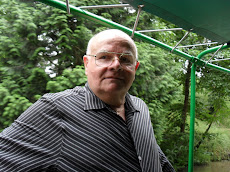
Ik dus ook niet, hoewel sommige fransdolle "Brusseleirs" het mij soms moeilijk maken ...

July 10 1697

On July 10 1697 Catharina Gansemans died at Pamel. She married twice. From het first husband she had Catharina Van Nieuwenhove (Pamel 1663 - Pamel 1743). The whole following line lived in Pamel.
Catharina Van Nieuwenhove married Petrus De Vidts (1655 - 1726), who had a son Judocus (1703 - 1750), who begot Petrus Joannes (1749 - 1793). Then came Joannes Franciscus (1784 - 1839) who was the father of Joannes (1811 - 1881), the father of my great-grandfather Felix De Vidts.

This line was already mentioned under "July 5 1694".